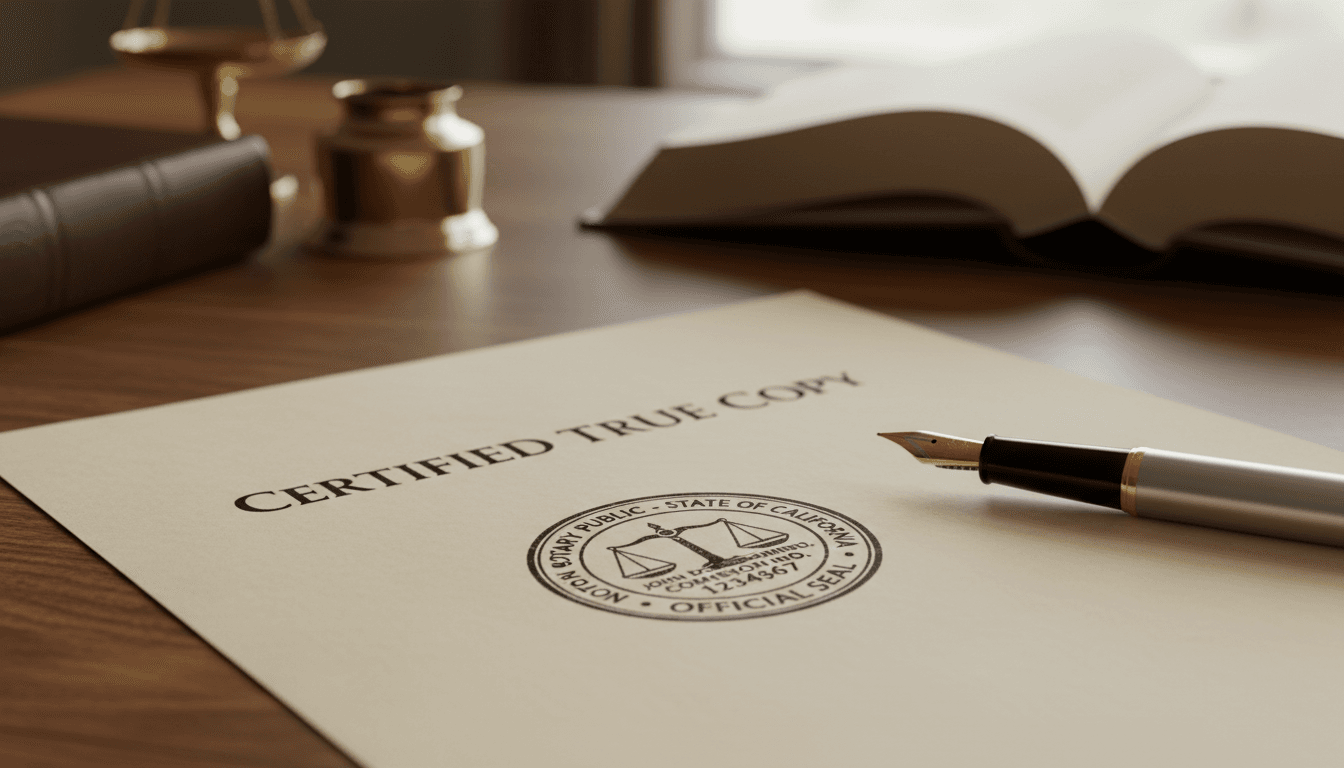
A Notary Public is a state-appointed public official who serves as an impartial witness during the signing of important documents. Their primary responsibility is to help deter fraud by verifying the identity of the person signing, ensuring they are signing willingly, and confirming they appear to understand the document they are signing.
It's important to understand that a notary is not there to judge the content of the document or provide legal advice (unless the notary is also a licensed attorney).
What Does a Notary Do?
Verify Identity
Before notarizing a document, the notary confirms the identity of each signer using acceptable identification, such as:
Driver's license
State-issued ID card
U.S. Passport
Military ID
Other forms of identification permitted by state law
Witness Signatures
The notary watches the signer sign the document (or acknowledges that the signer already signed it, depending on the type of notarization allowed under state law).
Ensure Willingness
The notary helps confirm that the signer:
Is acting voluntarily
Is not under pressure or coercion
Appears mentally aware of what they are signing
Complete the Notarial Certificate
After verifying the signer and witnessing the signature, the notary:
Signs the notarial certificate
Affixes their official seal or stamp
Records the notarization in a journal if required or maintained under state law
What a Notary Cannot Do
Many people misunderstand the role of a notary. A notary cannot:
❌ Give legal advice
❌ Explain legal documents
❌ Tell you which documents you need
❌ Prepare legal documents (unless separately authorized)
❌ Notarize a signature without the signer present (except where remote online notarization is legally authorized)
❌ Use an expired or unacceptable form of identification